Days have just begun getting shorter. A few years ago I discovered that there’s nothing special about the first of June.
There is something special about the twenty-first of June.
I always want to make summer solstice special.
It just passes.
Summer solstice is when you should go out and stay up all night. Watch the sun set over the lake. Watch it rise over the forest. Have a meal with your loved ones. Perform rituals. Go to sleep when the sun is already on its way up to the zenith. Wake up at noon. Have a cosy little feast. Enjoy a long siesta.
Evening time. You might do some work in the garden, even if it’s your digital garden.
Have a drink.
Turn the radio on.
It’s internet-curfew time already.
Do I want to go online?
I don’t know. Let’s find out.
Perhaps it’s best to keep the device stashed?
But what other way of testing myself is there?
Let’s unlock.
Only a few taps. A couple more scrolls.
That video was funny. Pretty mind-blowing, even.
What was it about again?
Bummer, the feed refreshed. I can’t go back.
I hope I stumble upon that account again.
The sun’s gone down.
Oh well.
I need to pee. Let’s check the For You page one last time before the bathroom break.
Should I bring my phone with me?
What if somebody calls?
Who? It’s almost midnight.
Just in case.
A friend might post an interesting story.
Rapid-fire flick-through.
Washing hands and watching a video about geopolitics.
The feed is running through me.
It would throb long after the flow stops. Lingering soreness. Enticing in its own way.
I’ve done it hundreds of times: set the machine down, introduced rules, enforced them.
Three days is all it takes, but then comes the “have I really gone off it?” check.
I’m there again with the machine in my hands. Just checking.
Is that what Sisyphus felt like?
It never occurred to him to just stop.
There are certain cycles we are empowered to sustain or break. There are others that trap us — those we have no influence over.
Do whatever you want — the solstice will come regardless.
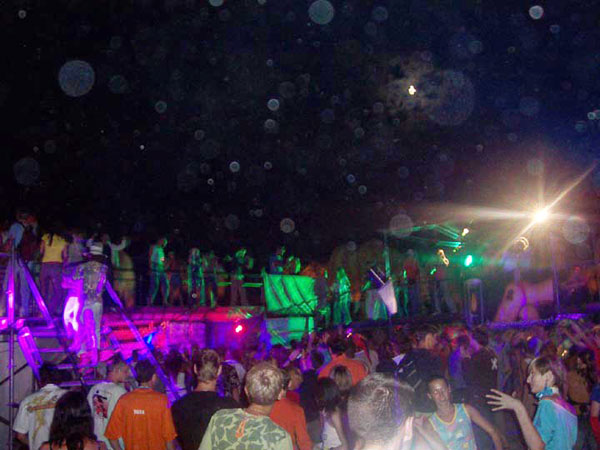
У тебя нету телефона с камерой, но есть фотоаппарат за двести баксов с картой памяти на 256 мегов и запасные батарейки в кармане джинсов. Но даже с батарейками в кармане ты не лупишь фотки очередью — карта памяти забита на 60%, когда ты сможешь сгрузить фотки — неизвестно, а фестивалить ещё три дня. Да и потом, по пути домой, захочется что-то пофотографировать.
Ты отщёлкаешь ещё пятьдесят, ну, максимум сто фоток. Придётся думать, что фоткать. Сегодня выступают Агата Кристи — может, и не стоит тратить память. Два-три фото для архива, но если что, потом удалишь.
Фестивалишь все три дня, пьёшь пиво, тусуешься на малых сценах и застаёшь становление культуры, которая воплотилась в тот самый 2007-й. Здесь, на малых сценах, ты отщёлкаешь половину оставшейся памяти фотика, потому что человек, воспитанный американской «альтернативой», приехал сюда не за русским роком, а за Jane Air, Amatory, Психеей, Tracktor Bowling.
Сентябрь сгорит через два года, но перед этим Стив Джобс явит миру первый Айфон, который со временем обытовит домашнее фото и видео.
Когда ты последний раз трепетно выставлял людей и несколько раз напоминал им не закрывать глаза, прежде чем «птичка вылетит»?
Птичка больше не вылетает.
Теперь мы стреляем очередями.
Да я сделаю хоть тысячу фоток! Мне плевать — у меня терабайт памяти в кармане.
В моём телефоне сейчас больше фото, чем во всех физических фотоальбомах моей семьи.
В нём больше памяти, но меньше воспоминаний.
Где-то в цифровом архиве хранится никудышная фотография. Там на полу валяются мои смятые грязные штаны, а половина фото по диагонали закрыта тьмой — то ли палец, то ли что. Это фото содержит воспоминания, метаболизированные в чистейший миф.
Говорят, их Егор возил в Минск за догоном. Слагаются мемы о том, как вместо одного ящика они взяли два… «ПОТОМУ ЧТО ОН КАЗАК!» — именно так я орал на всю «Корону», когда мы вместе с Казаком решали, сколько догона нужно привезти на дачу. Пересказывая ту тусовку, сходятся на том, что «они выпили 7-8 литров пива на рыло».
Именно такой была бы наша суточная норма, будь мы на Нашествии в 2005.
Как оно заведено, завершилось всё исходом: ты едешь из Тульской области через Брянск обратно в Минск. Зависаешь на несколько дней в Гомеле с новыми друзьями-земляками, с которыми вместе искали попутки в Беларусь. Добиваешь карту памяти видами на Сож и фоткой другана с каким-то беляшом возле ларька «Хутка-Смачна». Едешь довольный в плацкарте домой. Твой попутчик — сладкая горчинка, как в детстве, когда уходили гости и взрослые начинали прибираться. По твоему телу волнами пробегает эхо эмоций, которые ты испытал за те выходные. Гоняешь в голове смешные фразы пьяных роцкеров, то, как хотелось пить утром в первый день с непривычки, и кайфовые афтапати с новыми гомельскими друзьями уже в Беларуси, но ещё не дома.
Ты перерабатываешь опыт, пока едешь и смотришь в окно, где тупо поле и типа лес. Скучно. Хочется вернуться туда на фест или хотя бы в Гомель.
Как же было классно.
Дома встречает мама, кормит, спрашивает, как всё было и тут же перебивает: «Ну ладно, ты ешь сначала, потом расскажешь».
Ей не терпится услышать твой рассказ, но она же мать.
Ты ложишься спать.
Тяжело уснуть. Физически ты очень утомился, но воображение не перестаёт гудеть. Ворочаешься долго и, всё же, родной лязг трамваев под окном уверенно убаюкивает тебя. Дрыхнешь почти до полудня.
В доме быта неподалёку фотопечать. Сдаёшь им карту памяти и получаешь заветный конвертик с фотокарточками.
Вечером к вам в гости пришли дядя с тётей, которым до зуда любопытно было узнать, как их племянник съездил на свой первый фестиваль. Мама расставила чайную посуду, приготовила пирожки с капустой, а дядя с тётей принесли «Знічкі» и зефирки в шоколаде.
Ну… доставай.
Пошли от обратного — гомельский кореш с беляшом.
— О, эт чё за кент такой? — с ухмылкой спросил дядя.
— А эт Игорёк с Гомеля. Мы там под Тулой с ним закорешились.
— Понятно, а тут что за лужа?
— Это Сож, вообще-то. — встряла тётя.
И вы коллективно занимаетесь реконструкцией памяти. Возможно, какие-то моменты уже мифологизируются. Выступал ли Сплин? — уже не точно «нет». «Может, и был, но я тусил на малой сцене».
События, которые ты прожил, натурально окислились и подсушились. Теперь из этого материала можно создавать качественные, ароматные, сложные, долгоиграющие воспоминания.
Как же разительно это отличается от моего намеднишного опыта посещения дня рождения танцевальной школы, в которой я преподаю.
Вечеринка в честь дня рождения школы танцев Esta Rico. Минск. 2026.
В моём кармане не просто терабайт, но и антенна, которая даёт мне доступ к чему угодно по щучьему веленью. Взмахнув или свайпнув пальцем, я вязну в трясине контента с мероприятия. Я же сам эту трясину подпитываю своими репостами и загрузками. Одни и те же фотки, видео — бывают, с разных ракурсов, но обычно просто копии.
Ни продохнуть, ни окислиться.
Вместо того чтобы дать событию естественным образом зафиксироваться и переработаться, я остаюсь в его выделениях. Они во мне: захлёбывают, вызывают гниение и физическую тошноту. Самое поганое то, что жижа тягучая, тёплая, вязкая и сладкая — хочется оставаться в этом — как у мамы в утробе.
На выходе воспоминание формируется. Но с неприятным вкусом — как вино с пробковой болезнью. Оно хранится в погребах памяти, но никогда не открывается. Ты можешь посмотреть на него, открыв пост в инсте или блок из ста фоток с мероприятия у себя в телефоне. Ты не посмакуешь его, потому что не дал ему правильно созреть.
It’s May 1, 1999 — Labor Day in Belarus. I’m five years old, holding my grandma’s hand, heading to the market. Her hand felt like a big warm leather bag covered in a layer of parchment paper. At that age I expressed barely any revolt against the layers of clothing I was dressed in, but I do recall the discomfort caused by the tights, hats, and mittens. Was I really wearing all that on May 1? Unlikely, though not impossible.
That said, even the five-year-old me understood that it was a bit cold for May.
The way to the market was long—ten minutes on foot. Have you tried counting to sixty, ten times in a row, at age five?
I remember when my grandma’s friends came over for tea: I would get frustrated when they excluded me from the conversation. It was either babushka Galya or tyotya Natasha who always asked for ten more minutes. They expected me to do kid stuff: “Play with your Legos,” “Why don’t you draw something in your album?” “You showed us your play-doh figures last time—maybe go make some new ones?” I didn’t yield to their trivial prompts—unconvincing even to a five-year-old. I grabbed a wristwatch and timed the full ten minutes.
As my gaze tracked the watch hands, I grew unmoored from observing the actual passage of time.
“Ten minutes are up!” I exclaimed.
“Give us some more time, Seryozha, will you?” was their reply. The answer I would not stand for.
“What do you mean?! You said ten minutes! Ten minutes are up! It’s my turn now!”
The babushkas tried to carry on talking as if I was nothing but a pesky fly annoyingly orbiting their heads. I wouldn’t stop, persistently butting into their talk, demanding they honor the agreement. Finally, they gave in. I could converse.
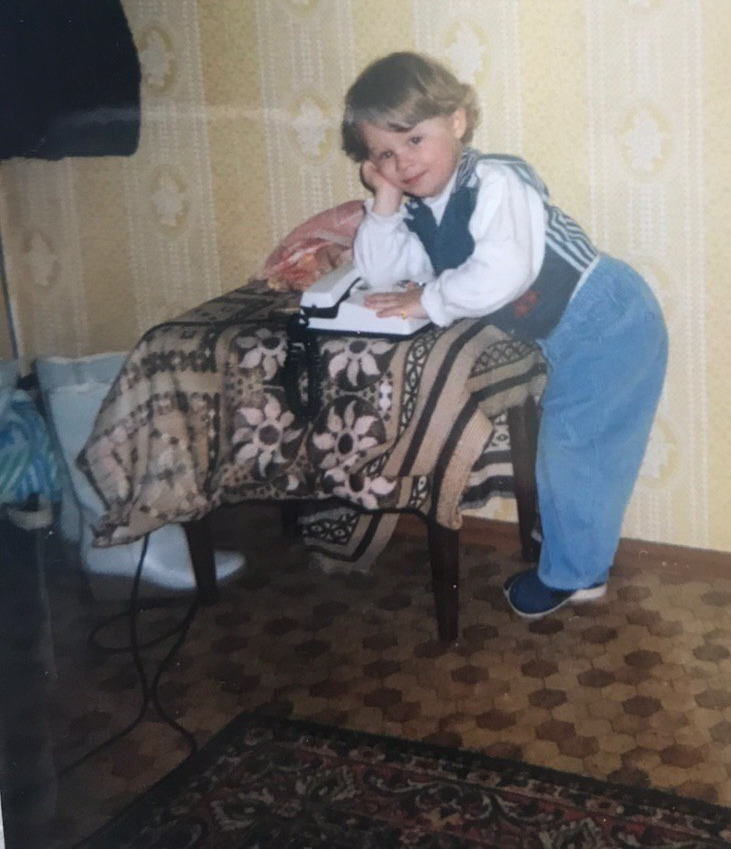
Me ~ 1997 (?)
There was one conversational partner who always had time to listen to my stories—but only during the summer. When June came around, I would spend most of my time with my grandparents at our dacha. My mom had to work, so I got to see her only on weekends. I was having a blast: so many bugs, creepy crawlies, plants, and smells. There were a bunch of neighbor kids of various ages, but I was taught not to get too friendly with them. We would ride bikes, go to the communal field, play ball—always busy. When I got tired from being a kid, I could always visit babushka Valya—a kind old lady whose dacha was right across the street. I wasn’t particularly good at keeping time as a preschooler. Days in June are endless, evenings long. Conversations with babushka Valya went on for hours—until the brightness of the day subsided, mosquitoes grew eager to feast, and the scent of moist grass rolled in from the field. We took breaks. I would run off to cater to less important matters, then come back, picking up where we left off. I was exceptionally good at remembering the cliffhangers. I brought her candies and cookies that I got from my grandma. Sometimes grandma would join us, but very quickly I got jealous. Babushka Valya’s attention was MINE! It was nice of grandma to let babushka Valya and me wrap up the conversation in private—something I couldn’t appreciate back then. Only now, as I excavate these memories, do I notice the tiny courteous gestures adults made. Adults shape the weather of childhood. The bad is hard to miss, though, and I made sure to get mad at grandma whenever she made me come home with her. It took me almost three decades to understand that she allowed me to experience the joy of private adult conversation. Knowing my grandmother, it’s most certainly accidental—she would never back away out of goodwill alone. But I choose to believe that she did: then and many times after.
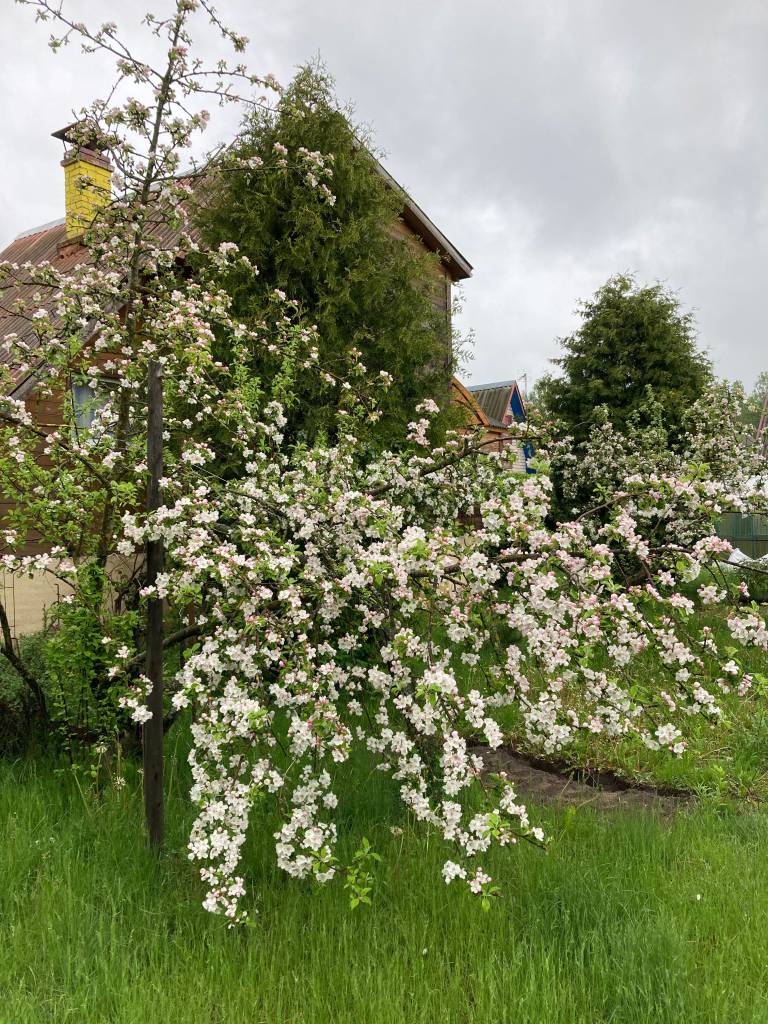
Apple Blossom Season at Our Dacha. 2022. Minsk Region, Belarus.
There’s no way to verify this, but I sometimes hypothesize: grandma could have let me stay out of spite. Maybe she was cross with babushka Valya and thus had me be the irritant. I was merely speaking the way a kid speaks—circling the exact same motif, regurgitating a single story, stacking adjectives—training. I was using babushka Valya as a practice audience; my grandma was using me as a weapon to “deliver a message.” And babushka Valya was a nice old lady.
Old ladies offered amazing ears for my embarrassing speeches, but I needed a different kind of audience for my superego to truly blossom. It was some five hundred days later—November 2000. My mother and I are in the living room of my godfather’s apartment. Besides us two, there were fifteen people or so. I don’t recall any kids my age—just people at least several years older than me.
People are giving toasts and raising glasses to the host—it’s his birthday. I whisper to my mom, “How old is he?” She leans in and whispers back, “Forty,” in a tone that I’ve since come to interpret as: Others can hear us. This is awkward. We’d better make it quick or avoid it altogether.
Understood. I raise my glass to make a toast. The audience is silent. Prepared. A seven-year-old begins the delivery: “Dear godfather! I congratulate you on your birthday! On this day I wish goodness not only upon you, but also upon your family and all those present today at this table!”
Standing ovation. Clinking glasses.
It wasn’t the first time I’d made a toast at a get-together, but it was certainly the most potent delivery yet. I was exhilarated—the adults genuinely impressed. Even years later, whenever my mother recalled this event, she would mention how highly the guests spoke of me.
It was so good that I needed more.
The guests ate, drank, and played. They grew loud and curious. Subconsciously, I felt it was the right time to get another “hit.” I stood up, raised my soda-filled glass, and began garnering attention. Some guests noticed and quieted down; others kept on with their conversations. I said something along the lines of “Dear guests!” and “I’d like to make a toast to the host…” but many ignored me. That was uncomfortable. The collective effort of the curious eventually compelled the rest to quiet down and listen. What does the kid have in store this time?
Not much.
I hit them with roughly the same toast as before, save for an added layer: “May not only those present here today have goodness borne upon them, but also everyone in Minsk and the whole country!” The crowd cheered. Some women found it a touchingly sweet addition to my original toast, but the overall reaction had dimmed.
I felt that. Was there something wrong with what I said? Was it the way I said it?
This repeated a few more times. With each toast I wished goodness upon a larger “audience”: first, guests at the table; then, fellow countrymen; then, the planet; and finally, the universe.
“What an idiot I was,” I thought to myself in the aftermath. “I should’ve stopped at ‘people of Belarus.’”
Embarrassing. My superego finally ripe. It was my own reflection in the guests’ eyes that I saw and
I no longer just felt; I now understood.
Five hundred days before that, I understood less—but enough to know that it was a bit cold for May. As grandma and I passed through the market gates, I saw little mounds of snow in the shade. I frequently bring up this image in conversations about climate change, childhood, and core memories.
My godfather’s fortieth birthday. Endless 90s summers. Grandma’s clique. I don’t remember snow in Minsk at this time of year before or since. And if I did…
Would the other memories still be there?
Did I ever talk to babushka Valya about the snow mounds in the shade at the market on Labor Day?
Я смотрю сквозь прозрачное желе; вижу пузыри внутри, ошмётки мышечных волокон. Там застывший сгусток мясного сока. Хрящ. Подвешен большой кусок моркови.
Этот полупрозрачный блок покрыт шапкой застывшего жира и пены. Сквозь него приятно смотреть на предзакатное солнце — сетчатка не горит, свет растекается.
Мимо прошла мама. Шлейфануло свиным и лавровым. Немного металлическим.
Чую запах сухожилий.
Чем моложе я был, тем меньше меня интересовали соединительные ткани и органы. Церковный кагор был слишком горьким. Бабушка с мамой водили к причастию в церковь, а дед тянул за руку в пивнуху. Помню высокие столы и здоровенные пивные бокалы у магазина на улице Якубова. Дед давал хлебнуть пенки. Потом он же на даче плеснул мне пивка в стакан с машинкой Ferrari. Мне не было и восьми.
В старших классах летом мы пошли с пацанами пить пиво в кустах Парка Грековой. Там были лишь тропинки, да заросли. Пару обветшалых лавок.
Уютно.
Тепло, но не знойно.
Мы взяли по литровой банке Балтики.
Мы ныкались, чтобы нас не спалили; убегали от ментов, которые нас даже не видели; Я брал с собой баскетбольный мяч; он уплывал к центру Чижовского водохранилища; я нырнул. Намок. Обсох.
Я проигрываю воспоминание. Оно ощущается как тёплый яркий свет, но сквозь пелену; приятно и жутко — непонятно почему.
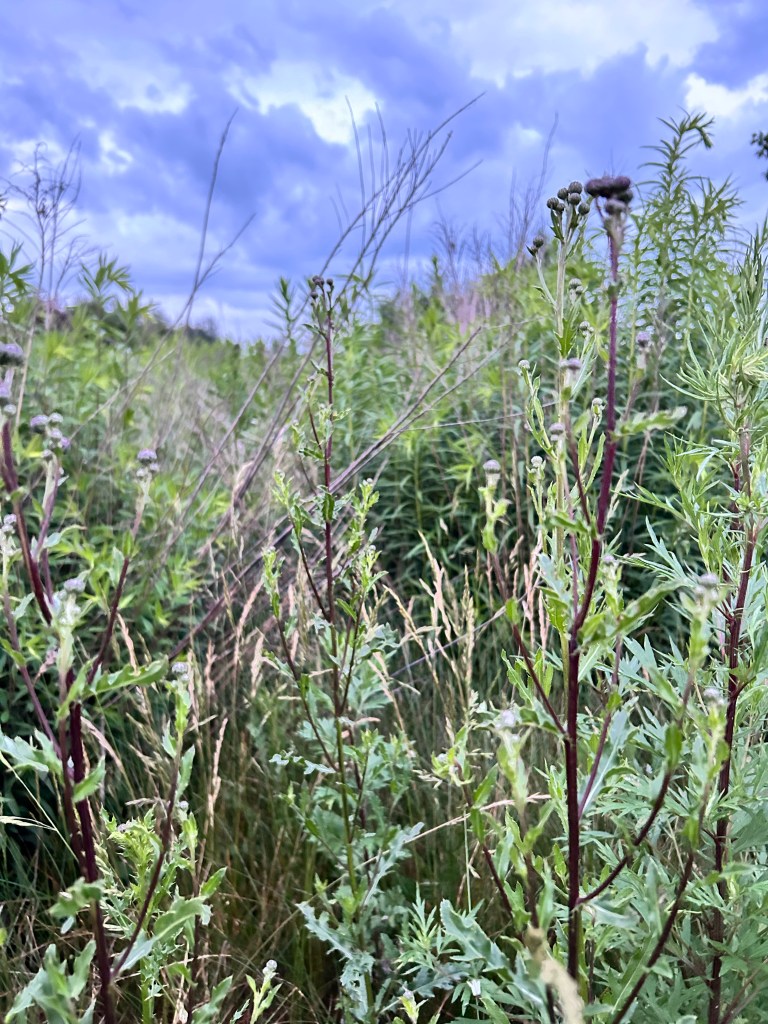
Внутри головы, за носовой полостью, по диагонали к центру мозга я чувствую запах крапивы и полыни. Сладкий запах лугового мёда.
Они мутируют. Переходят в благовония.
В ладан.
Я вспоминаю первое причастие. Помню ложку в руках батюшки и странную жидкость, которая осушает, вместо того, чтобы орошать.
Мне говорили «ты вкушаешь плоть Христа» и мне казалось, что я делаю что-то непотребное.
Меня научили креститься.
Я читал Отче наш перед сном. Просил Бога о благах и расстраивался, когда он не исполнял моих желаний.
Утром я читал Золотую рыбку. После обеда — детскую Библию. На день рождения загадывал желание. На Новый год я писал письмо Деду Морозу. На Пасху мне Иисус принёс игрушку.
На церковные праздники у нас всегда был холодец. Я пробовал и меня воротило.
Выйдя из юности, постепенно, у меня развился к нему вкус.
Сейчас я почти не крещусь, но всё также читаю Отче наш перед сном.
Сказки Пушкина оставил в отчем доме.
Я продолжаю молиться: у меня всё есть; я благодарю и прошу наставления.
Теперь моя плоть кормит.
Теперь я варю холодец.
Чем старше я становлюсь, тем больше меня интересуют соединительные ткани и органы. Я отрываю зубами хрящи. Я ковыряюсь в кости, чтобы высосать костный мозг. Я ковыряюсь в земле, сажая картофель; разглядываю в почве фрагменты скелетов, гнилые клубни и куски глины. Сыплю пепел в лунки. Жду всходов.
Whenever I have dance classes at a new place, it’s almost always an old Soviet building repurposed to house random small businesses.
Though I am part of the culture—and even a contributor, since I used to rent my own office in a building like that—I still get taken aback when I enter one.
Figuring out the way in is part of the experience. Learning to read the cryptic instructions left by the space owners—a necessary prerequisite.
I teach bachata in one of these repurposed offices. I walk in and out several times a week, but a voice in my head still goes, “Why would anyone want to come here to dance? Aren’t there more inspiring places?”
There aren’t. Very few, at most.
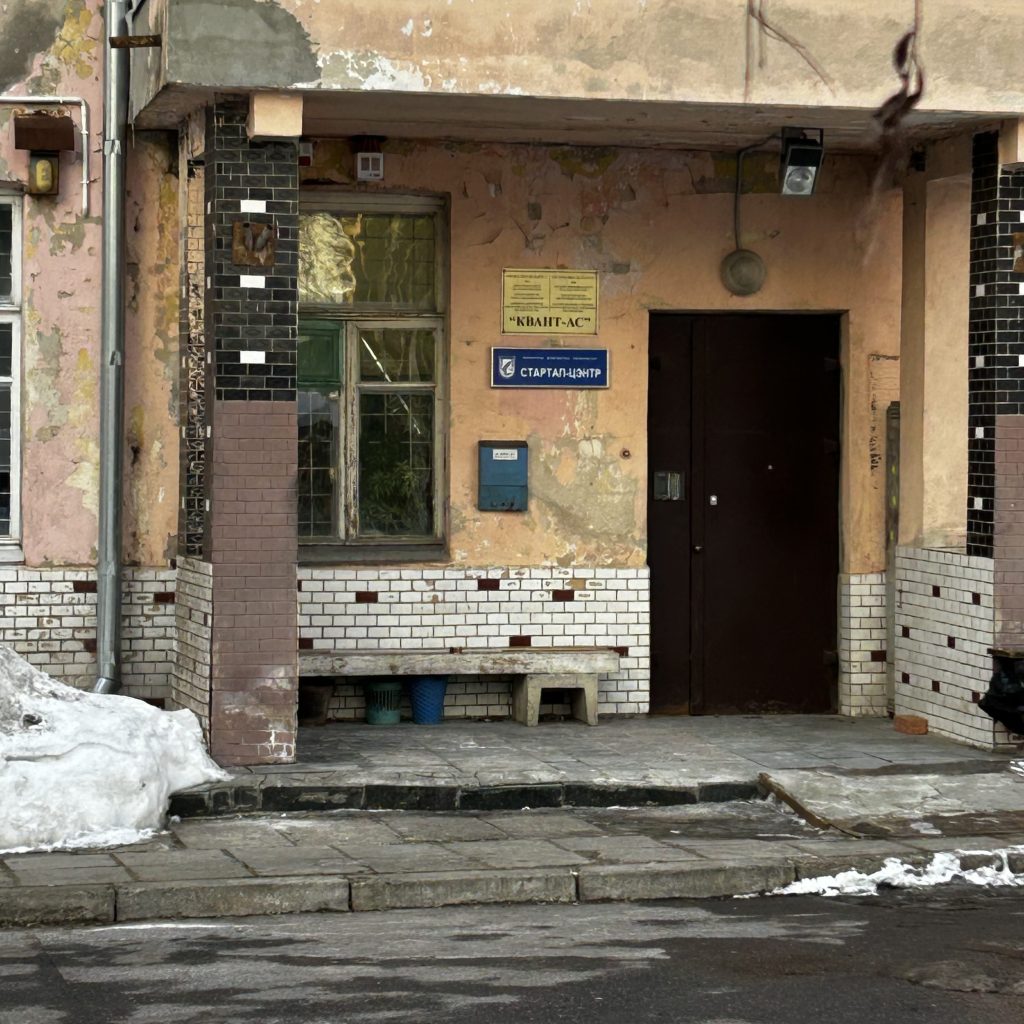
The building is not inviting—it’s a backrooms portal, not a hub for cute businesses. The halls are long, not dim, but not bright either—the lighting is balanced precisely at the threshold where you want it either brighter or dimmer.
Liminal.
The blue sign reads: Startup Center. Minsk. 2026
“Who gets their nails done here?”
Apparently, many—the nail salon next door had been there even before our school moved in.
If I were a woman, I would go to nice salons—if not in separate buildings, then at least on the ground floor of an upscale condo. Besides, there isn’t much of a price difference between them and the ones from the “backrooms”.
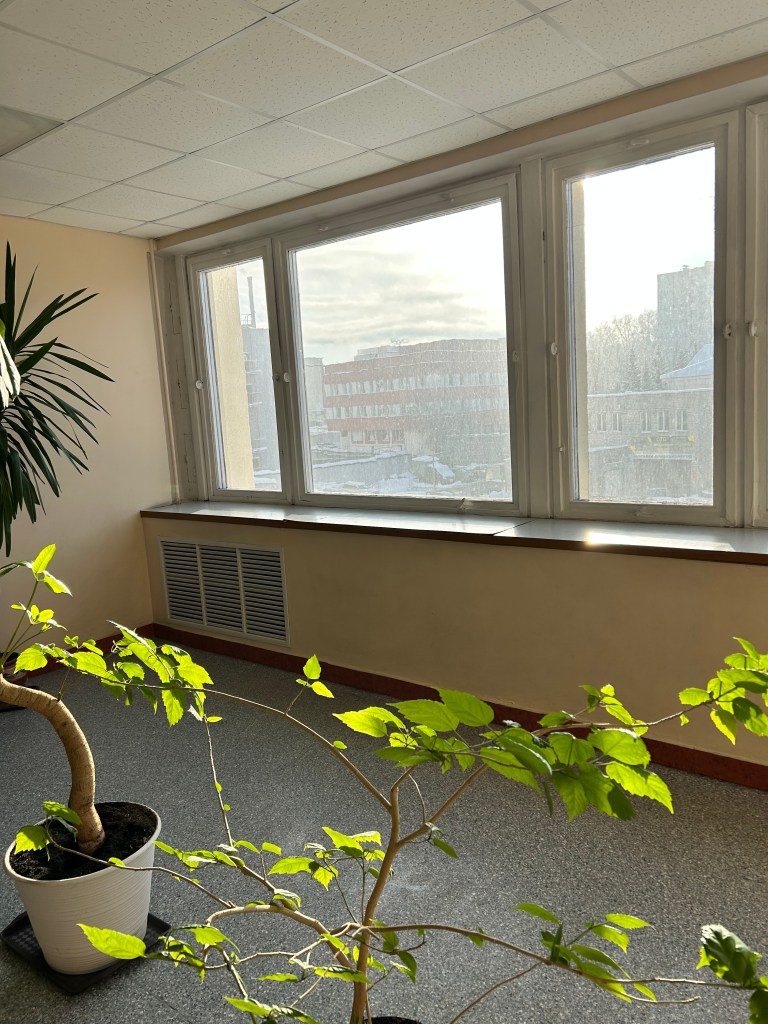
Rare sunny day image from inside the hall of the Masherova Ave small business cluster where the dance studio I teach at is located. Minsk. 2026.
This got me thinking: I pay my barber 120 Belarusian Roubles (BYN) for a haircut and beard trim.
I wonder at what price point I would start looking for a different professional.
I think at 150 BYN I’d opt out.
I ran another thought experiment.
If I had unlimited purchasing power, under what circumstances would I switch barbers?
Karén—my Armenian barber—would have to mess things up three, maybe six times in a row.
Or: a different barber talks me into getting a cut after showing his incredible work. He’d have to be a hell of a speaker. I’d require testimonials from men I trust. Finally, the barber would have to deliver extraordinarily—an exquisite cut, a sense of luxury, the presence of truly refined skill.
I’d make that switch.
Psychological barriers are relative and sometimes deeply personal.
Maybe it’s not all about money. Sometimes it’s about awareness.
Throughout most of my life, I got my hair cut at home—sometimes at someone else’s.
At first, my mom was the hairdresser. Not sure if my grandma ever did it. Possibly so.
Then, when we were living in Canada, my mom would drive me to a Russian-speaking hairdresser who worked at a salon—that was a three-year exception.
Once we got back to Belarus in 2006, my mother found a woman named Rita who cut hair on the side at her place. There were occasional periods when I got my hair cut by someone else, but my relationship with Rita still lasted more than ten years.
My last visit was in 2018.
That same year, my friend Vlad got a gift certificate to a barbershop close to his house. After visiting “Gents,” Vlad was impressed with the service and advised me to check it out.
He made me aware, sparked curiosity, and injected credibility.
I was sceptical.
Barbershop culture in Minsk began to develop in the 2010s as a hipster trend. Though historically, in the Russian Empire—of which Belarus was long a part—the concept of a tsyrulnik (barber) was entirely unremarkable, it later fell out of use in the USSR.
The vehicle of hipster culture plowed through the soil of my country with ease—we already had broadband internet, Counter-Strike had taught us cultural awareness, and Instagram showed us that people around the world are not that different.
Remember metrosexuals?
They became hipsters.
Now—in 2026—we have looksmaxxers alongside old money aesthetics.
Men are always rebranding caring about looking good.
I took that sentence from a comment I saw online.
In 2018, hip barbershops weren’t yet a solidified niche in Belarus, and I didn’t want to be hip—I wanted to be avant-garde. But Vlad persuaded me.
The thing I was most afraid of was a generic barbershop cut, so when I opened the barber selection page on the Gents’ website, it felt like the match scene in The Fifth Element—make no mistake or the world will perish.
I had to make the right decision. I knew it had to be a man, and preferably someone from the older generation, otherwise I’d end up stuck with a copy-pasted undercut for a month.
Luckily, they had Karén. He seemed to be over forty at the time, gave off trustworthy expert vibes, so I clicked.
And stayed.
Last year, I told Karén that when he retires, I’ll pay five times my regular fee for a referral.
Still—
all that considered—
should he decide to go over 150 BYN…
I’ll go looking.
But not on the seventh floor of an ex-ministry of whatever.
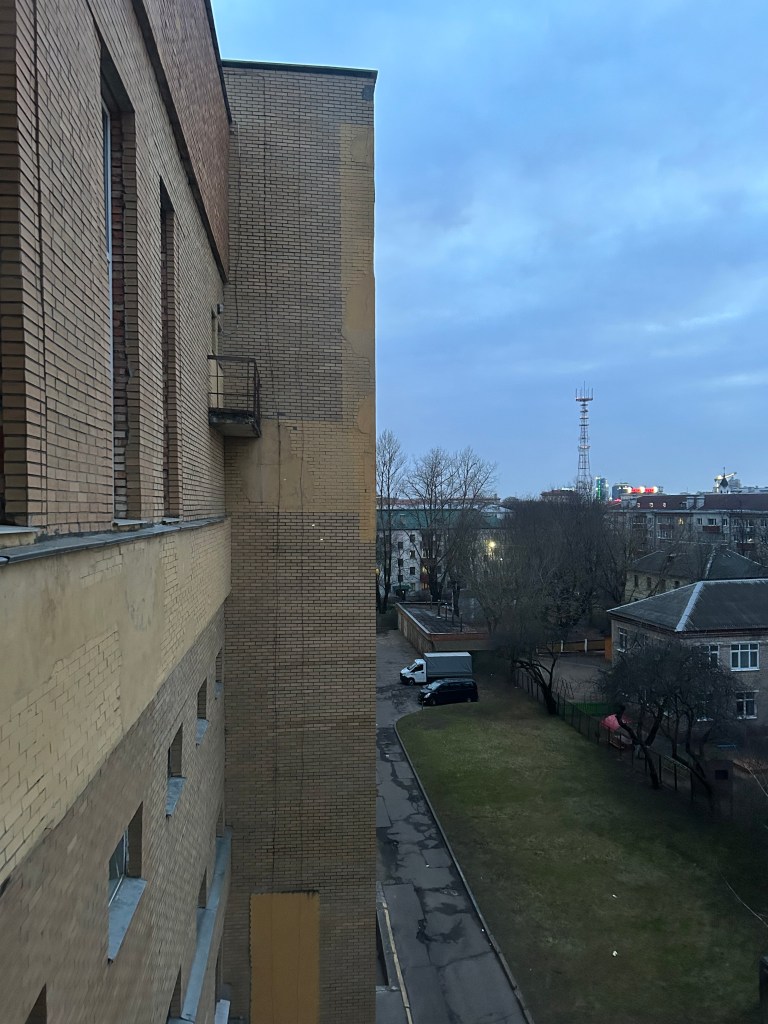
From the inside of a small business cluster located at Smolyachkova 9, Minsk, Belarus. 2024.

 Юревич. Yurevich.