How experience changes our perception. Why memories feel different from reality.
Originally published on Substack:
https://yurevich.substack.com/p/the-room-didnt-change-you-did
Whenever I visit my grandmother, I try to do at least one of two things: record her memoirs or flick through photo albums. Sometimes I get to do both.
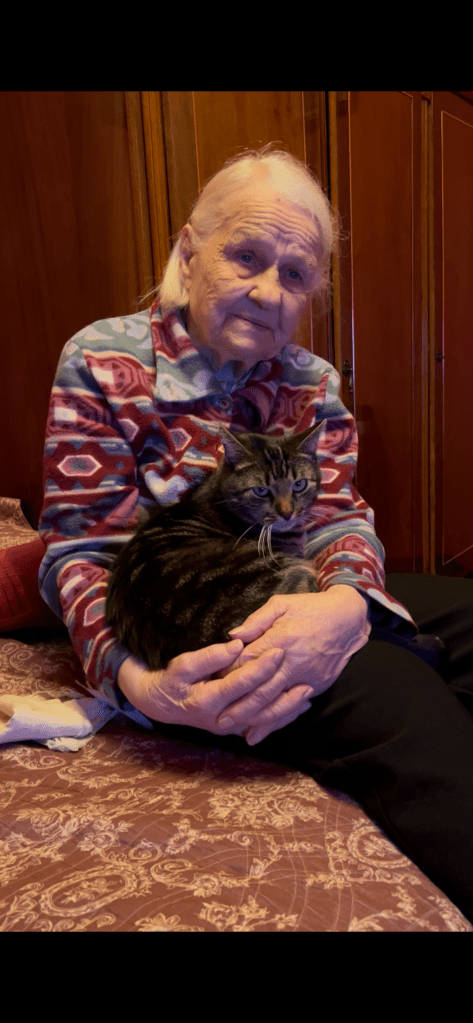
The other day, while the cat inspected his real estate, grandma rambled on about the past—stories I’d heard a thousand times. I sat there on the couch next to her, surrounded by photos from different eras.
Minutes before, I’d asked her where all the photo albums had gone. I remembered stacks of them from when I used to live there.
She brushed it off.
Gaslit again.
Classic.
I knew it was pointless to keep trying to prove something. I wasn’t all that certain about it anyway.
An awkward silence moment later, she pointed to a box wedged in the notch between the wall and the closet. That’s where most of the photos are.
I pulled the box out, opened it, and discovered a bunch of envelopes, files, and loose photographs.
I wasn’t looking for anything in particular, so I was down for whatever. Except for the photos I’d seen two or three months prior. Multiple copies of the same photo are so irritating. I don’t know if you can relate. It may have been an exclusive bug in my family: an envelope with Canadian photos from 2005 containing five copies of the same “Me and the Hot Air Balloons” image, that same photo in a loose stack, and then the very same one again in a completely unrelated album.
Anyway.
I reached inside the envelope I’d grabbed from the top of the pile, pulled out the photos, and realized that these were photos from an era I’d been part of.
Yes, I’m interested. This is directly connected to my lore.
Don’t get me wrong, I love digging through the old black and white photos from when my grandma was young, but at that very moment I preferred color.
I wonder, had it been a different envelope, would I have opted for contemporary photos, despite the old ones annoyingly sticking to my fingers?
The envelope decided for me.
As I fumbled through the box of photos, excavating more envelopes, grandma joined in. And just as I was drawn to the modern, she was drawn to the retro. She even managed to dig out a photo from 1935 when she was around the age of seven—a little schoolgirl.
There were actually two kids in that shot: my grandma and her friend. Both of them small gloomy Eastern European girls.
I asked why they looked so drooping and solemn. They were a horror story book cover. Strong “American Gothic” vibes. Perhaps that’s what the 1930s were all about? Globally.
Her answer made everything click. “It was the first time we saw a camera. We were country girls. We didn’t know what we were supposed to do. A photographer came to our town and took photos of whoever wanted to.”
Of course! Why didn’t I think of that? A century ago, cameras were anything but common. There was no photo culture, no posing, no etiquette.
Better cut grandma some slack.
We went on shuffling through the photos.
Some envelopes I’d never seen before—my parents’ wedding, for instance.
I had seen a few pics here and there but never an organized stack.
It was a wonderful find. My parents divorced before I turned one year old, as far as I know. (Obviously, I can’t remember any of that.)
I was living with my mom and grandparents from as far back as I can remember until I moved out at 28. I never met my father, though some sparse indirect communication took place via my mother.
I didn’t know what kind of person he was, and I think my family did a great job of opting out of forming a particular perception of my dad.
He always remained a stranger.
No associations.
To this day I have no opinion of him.
I consider this a feature of my upbringing.
But that said, I am very curious about my own prehistory. Funnily enough, when I was asked in first grade who I want to be when I grow up, I said “archaeologist”. I’ve always been the type of guy that enjoys digging and uncovering artifacts, even if it’s metaphysical.
When you come across mementos, memories surface. But nothing in the memories ever feels the same as the actual lived experience. It becomes most evident when the memento is not a hint but is something explicit—like a photo or video.
And as I was shuffling through the photos, I saw myself.
Little Sergei.
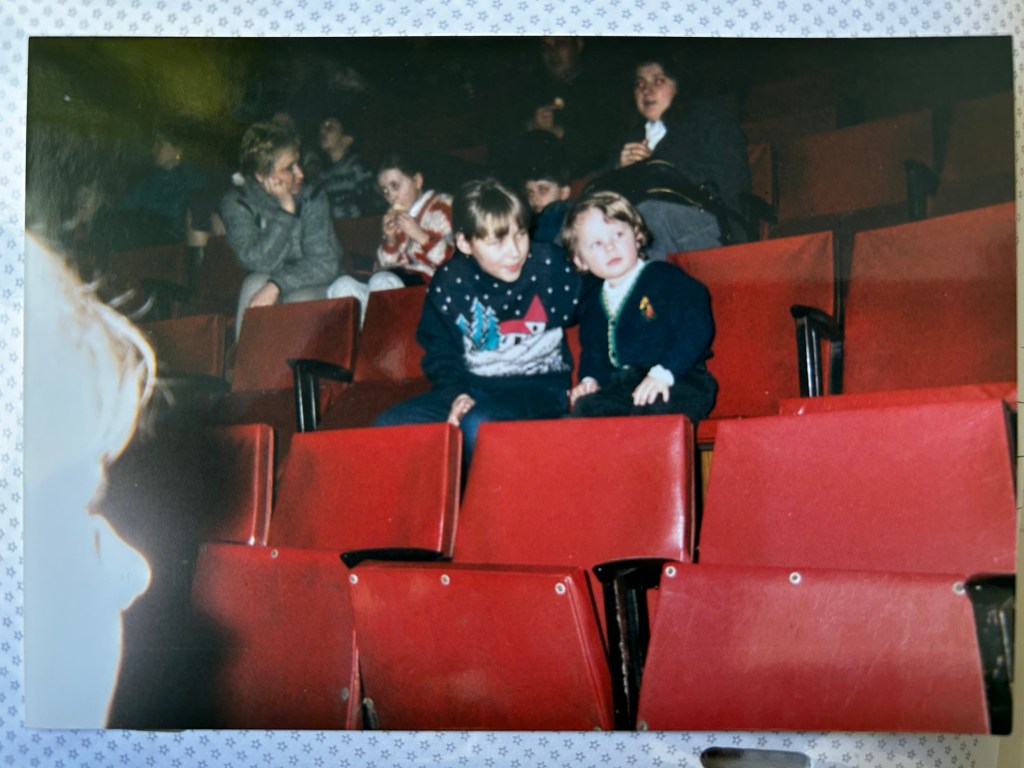
He’s four years old there.
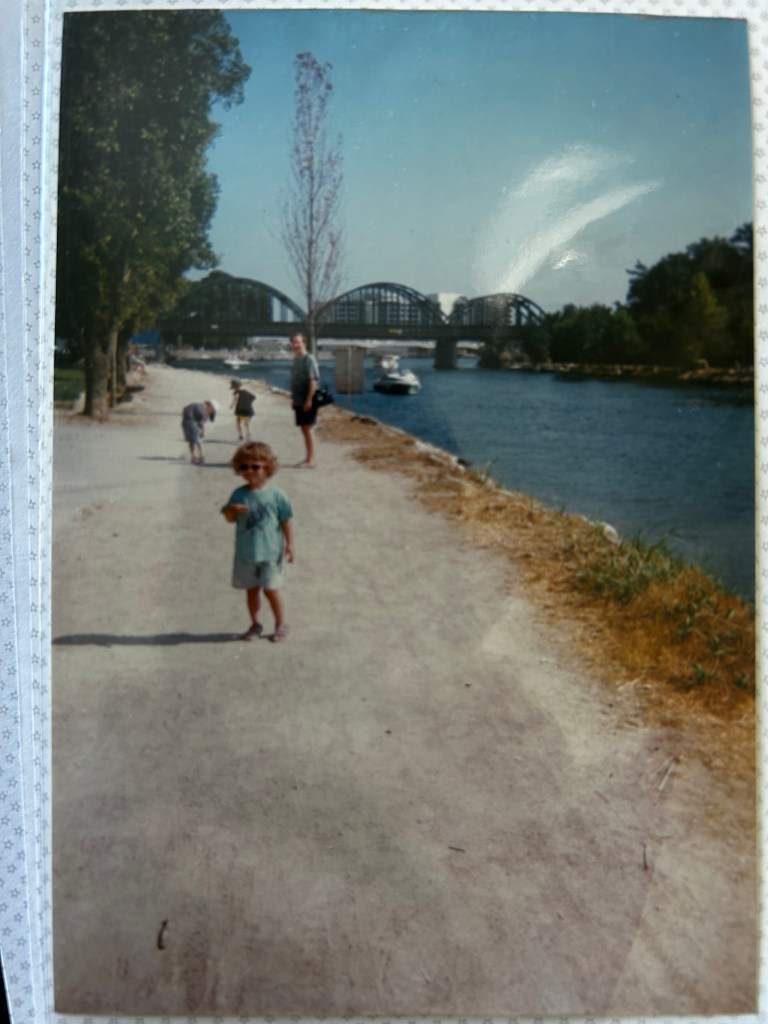
And in another one—six.
I remember myself relatively well from about the age of three—I have memories of the four-year-old Sergei and the six-year-old Sergei in the photos.
I see little Sergei in the very same room I am in now.
I feel a mild shock and an eerie disturbance: the room in the photo looks almost the same as it does now—but in my memory, it’s nothing like this.
The sofa is the same. The bookshelf. The carpet.
They are in the photo. I see them with my very eyes. Their sameness is apparent.
Yet,
when I conjure up the memory of me sitting in that room at age four, I realize that I experienced through a different “lens” of perception.
That’s the thing.
I recall the way I perceived the depth of space, the texture of fabric, the colors and smells. It’s changed. It’s matured, clearly—but at the expense of certain sensitivity.
Children see and feel the texture of things in higher definition. Proprioception differs significantly.
I zoom out of my contemplations and focus on the photo again: I was three or four times smaller. That’s why the room felt like there was more depth, volume, more notches, crevices, curves, cracks. My attention was fully present, focused on the physical, in the now—that’s different from how adults operate.
My attention now has to cater to several abstract layers, computing juxtapositions of actions and consequences, as well as orbiting the meta-sphere—all while still trying to remain connected to the present physical now.
Adults are virtuoso conductors orchestrating attention.
In theory.
I definitely love being distracted by something useful. Like footage of me dancing (I dance bachata urbana, moderna, sensual, and fusion). That way I delegate the curation of my attention to the distractor.
Very little energy spent.
A lot of value extracted.
I apply my academically trained mind to watching tape—I change “lenses”—each one rendering visible different layers and modes. It’s like x-ray vision, but for frame and posture; like ultrasound, but for weight transfer.
I remember what watching other dancers at the beginning of my bachata journey was like. When I was six months in (around 100 hours of dance training and practice), the guys with more than a year of experience looked so good. All those moves! The professionals were exceptional: their moves elaborate, musicality off the charts, style—ornate.
I’ve been doing bachata for more than three years now with more than 2000 hours of training and practice under my belt. In a couple of months, it will mark one year of me teaching bachata.
All this experience completely transformed the way I see dancing and dancers.
Just as I could barely see the skill gap between advanced and professional dancers when I was a beginner, the gap between beginners and intermediates strikes me as equally narrow today.
When you are a beginner in anything, the next skill upgrade is when you learn a new move, technique, element. The advanced crowd usually knows the same moves as the pros—that’s why a beginner’s eye finds it hard to spot high-level skill discrepancy.
The transition from advanced to professional—the path of mastery—is paved with the “how,” not the “what.”
A pro dancer will execute the same move an advanced one performed, but with immensely more control, precision, and depth.
An amateur will notice “something” but won’t be able to define it.
Experience affects how we perceive.
When I watch my dancing videos from my beginner era, it’s like watching a different person. I see a clumsy man who is quite clueless about how to lead a follower.
When I look at the photo of little Sergei, I see a blond dandy boy who is naïve in the most beautiful way.
It’s me, though.
 Юревич. Yurevich.